

Opinions are valid! - Go have yours heard tomorrow April 22nd, at the CVRD Building- 9:30 am! Tell them how you feel about the Comprehensive Zoning Bylaw and 4632.
Things sure have changed in the past month. We expected this given that it’s an election year, but it seems like with the past election something big came up during that election year. For many the 2022 election was about the North Cowichan OCP. The question at almost every ‘all candidates meetings” was: “will you support the OCP”. Now 2026 it seems to be bylaws and OCP in the CVRD will have a large sway in the upcoming elections.
Now a lot of people didn’t come looking for planning policy, that stuff is boring. But it found THEM. A rule changed, a permit got harder, a cost showed up, and something that used to be simple suddenly wasn’t. So they did what any normal person would do. They asked questions.
And almost immediately, the conversation split in two. The usual edge cases which divide a community, council, whatever.
On one side, you’ve got people trying to understand what’s happening. On the other, you’ve got a group that steps in to manage how that conversation is allowed to happen. Not answer it. Manage it. (Most call this gatekeeping)
If you’ve engaged at all lately, you’ve felt this. You raise a concern, maybe a bit frustrated, maybe not perfectly worded, and instead of a clear answer, you get corrected. Not on the substance. On your tone, your framing, your intent.
You’ll hear things like “this is misinformation” or “this isn’t constructive” or “this kind of rhetoric is harmful.” And just like that, you’re no longer someone asking a question. You’re someone who needs to be corrected.
That shift is the entire game. Once the focus moves off the issue and onto you, the original concern disappears.
If you keep pushing, or if you’re part of a group that’s been consistently covering these issues, the label changes. Now it’s not just that you’re misinformed. Now you’re “stirring things up” or “profiting from community crisis.” The conversation moves from what’s being said to why you’re saying it.
That’s not accidental. That’s how you discredit the message without having to deal with it. If people can be convinced the source has bad intent, they don’t have to engage with the information at all.
Noam Chomsky:
“The smart way to keep people passive and obedient is to strictly limit the spectrum of acceptable opinion, but allow very lively debate within that spectrum.”
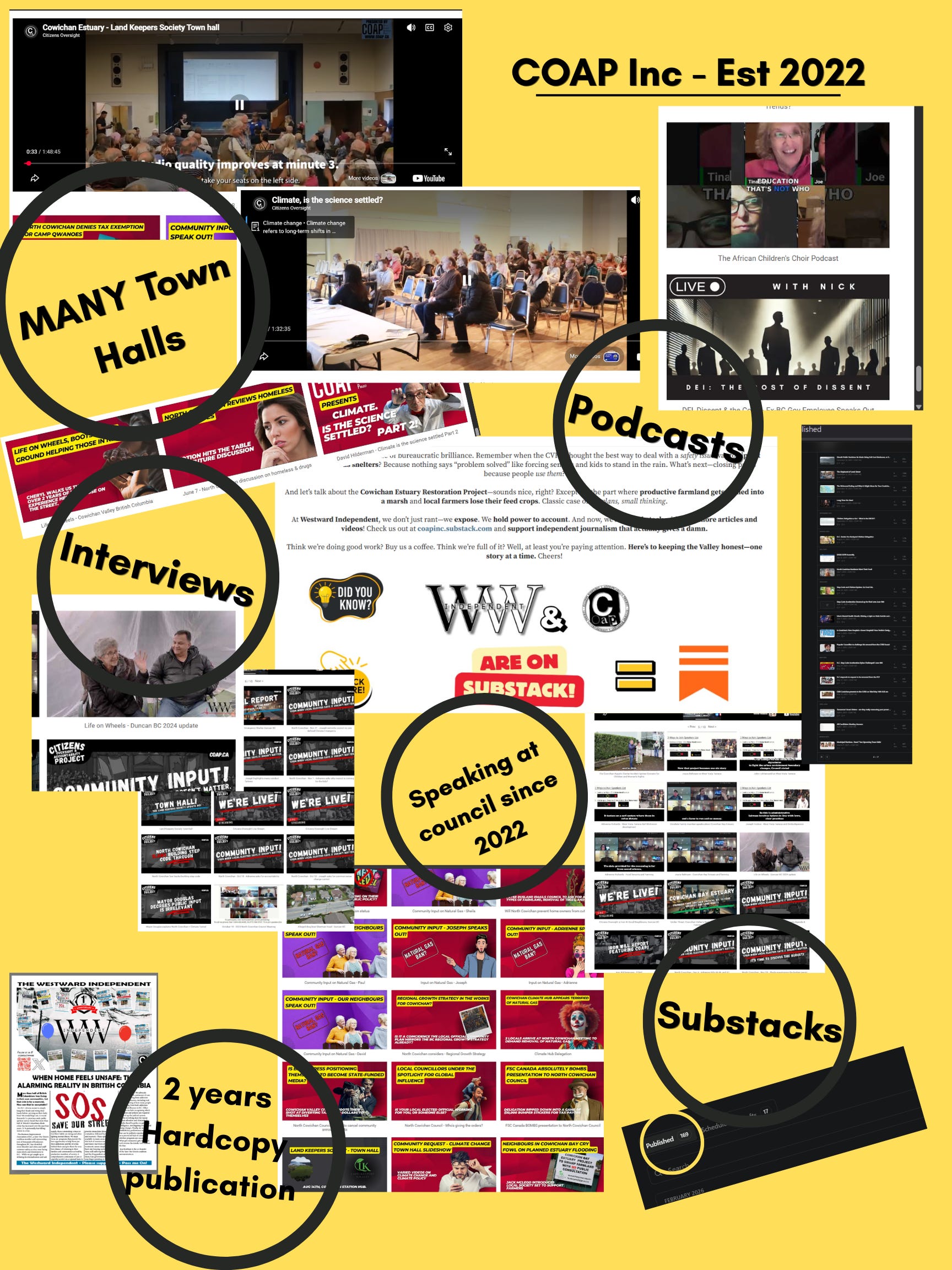
For years, some of us have been doing the unglamorous work. Sitting through meetings, reading the documents, breaking down what’s actually being proposed so regular people can understand it. Not because it’s easy, but because nobody else was doing it in a way that connected to real life. We live in an area that has 5 different governmental systems so closely related you could be effected by any of them at any time. No one has the time to monitor that many meetings.
Now that more people are paying attention, that same work gets reframed. Not as information, but as motive. And once that shift happens, it’s easier to dismiss everything that comes after.
Underneath all of this is something that rarely gets said out loud. The direction of these planning systems isn’t random. You can trace it. Long-term plans set the vision, zoning aligns to that vision, and approvals enforce it on the ground. That chain is how things move from idea to reality.
By the time most people feel it, it’s already in the implementation stage. You’re not debating the idea anymore. You’re dealing with the outcome.
And that’s where the tension comes from. These systems are built to operate at a broad level. Regional, provincial, sometimes even wider alignment. They’re designed around big-picture goals that look clean on paper.
Like the OCP. A lot of people supported it. It promised a better future, smarter growth, more livable communities. On the surface, it’s hard to argue with the end goal.
But what it doesn’t show you clearly is the path to get there. The bylaw changes. The new restrictions. The Transportation Plans. The Climate Goals. The added layers of approvals. The small, day-to-day shifts that quietly reshape how people can use their own property or run a business.
People don’t live at the big-picture level. They live at the individual level. A property, a business, a decision that affects their family. When those two collide, something has to give. And more often than not, it’s the individual experience that gets minimized.
When people react to that, it doesn’t come out as a polished policy critique. It comes out as frustration. Questions. Pushback. And instead of that being treated as valuable input, it gets reframed as something that needs to be managed.
That’s why the tone policing matters. That’s why the “misinformation” label gets used so quickly. That’s why the “you’re profiting from this” line shows up. Because if the conversation stays focused on what’s actually happening, people start connecting dots.
From Arthur Schopenhauer (from The Art of Being Right):
“If you cannot refute your opponent’s argument, you can still attack his person.”
But if the conversation shifts to who’s saying it and how they’re saying it, everything slows down. People hesitate. They second guess themselves. Some just back off entirely. That’s all it takes. You don’t need to silence everyone. You just need enough pressure to thin the room out.
Meanwhile, the people who are comfortable in that environment step forward as interpreters. They’ll tell you what it really means, what you should take from it, how you should understand it. And if that’s all you see, it feels complete. Clean. Settled.
But it’s still just one version.
None of this means every concern is perfectly stated. Of course it isn’t. That’s what happens when regular people get involved. But that’s also where the value is, because they’re reacting to impact, not theory.
If something changes and it affects your life, you don’t need a policy background to ask why. You don’t need perfect language to say it doesn’t make sense. You just need to be willing to speak.
And right now, that’s the part being quietly discouraged. Not through rules, but through pressure.
So if you’ve caught yourself hesitating, thinking maybe you don’t know enough to say anything, that maybe it’s better to stay out of it, that’s not random. That’s the environment doing exactly what it’s designed to do.
Elisabeth Noelle-Neumann (Spiral of Silence theory):
“Individuals who perceive their opinions to be in the minority are less likely to express them, for fear of isolation.”
Read things for yourself. Ask anyway. Push where it doesn’t make sense, even if it’s not perfectly worded.
Because once the standard becomes “you have to be perfectly informed before you’re allowed to speak,” most people will opt out.
And when that happens, the only voices left are the ones deciding what’s acceptable to say in the first place.
From Hannah Arendt:
“The aim of totalitarian education has never been to instill convictions but to destroy the capacity to form any.”
For the gatekeepers attempting to indicate we are just ‘hear now’ for this - we are sorry we have missed the past 5 years, but we send love as community members anyway.
This is a community that has come together more than WE have witnesses during all our time at this - well DONE - This community may be the catalyst for the province.
Team COAP
coap.ca
contact@coap.ca
wwind.ca
https://www.youtube.com/@coapinc
Thank you for all your work!
Thank you for all your work!